


 ₹https://clinic.asgeyehospital.com/locator/-in-raipur/-in-shankar-nagar/asg-eye-hospital-in-shankar-nagar-raipur--5Fu0Oc/articles/what-is-2020-vision-in-shankar-nagar-raipur-meaning-myths-eye-health-facts--f7dc253b-022a-4962-91f1-0458b3b1716a
ASG Eye Hospital, Shankar Nagar, raipur
Second & Third floor Madan Complex, Shakti Nagar Road, Shankar Nagar, raipur, chhattisgarh - 492004
Request A Call Back
ASG Eye Hospital Social Feeds in Shankar Nagar, raipur
What Is 20/20 Vision in Shankar Nagar, raipur? Meaning, Myths & Eye Health Facts
Hearing that you have 20/20 vision may come across as a free report card for your eyes. Many think that this report means you have perfect vision, will never require glasses, and do not have to get another exam until your sight goes blurry. In reality, it is more complex. That number reports that you recognise detail at a certain distance, but it does not include all aspects of sight or confirm that all eye structures are healthy.
A typical chart result may present at the same time as issues with night driving, glare, side vision, colour recognition, fine work, or eye teaming. It may also stay normal in the early stages of some eye conditions. That is to say, the test is only a part of the overall eye examination and not the full picture of what healthy eyesight is.
What Does 20/20 Vision Mean?
From routine use of the distance eye chart, we get the report. What we see as the first number is the testing distance, which is 20 feet in this case. The second number reports at what distance a person with normal vision is expected to read that same line. Also, 20/20 vision means you are able to identify at 20 feet what a person with normal sight would identify at 20 feet.
In most settings that use metres, the equivalent is usually reported as 6/6. A result of 20/40 means you must stand at 20 feet to see what a standard observer can see at 40 feet. A result of 20/15 means you are seeing at a sharper distance than the common measure. These fractions report distance visual acuity, which is not a full picture of visual health.
Is 20/20 Vision the Same as Perfect Vision?
No. Although we tend to use these terms as if they are the same, they are not. Perfect vision does not equate to a precise medical definition of a chart score. What we term good sight includes peripheral awareness, depth perception, contrast sensitivity, colour discrimination, near focus, eye alignment, and the brain’s processing of visual information.
Some people have perfect 20/20 vision and yet may still have dry eye, reduced contrast sensitivity, poor night vision, or an early stage of an eye disease. Some diseases present no initial symptoms, which means that while central vision may appear normal, it is the peripheral vision that suffers. The National Eye Institute reports that a dilated eye exam is the best way to catch eye disease before there is any noticeable loss of sight.
The concept of perfect vision also does not take into account real-world situations. Factors such as lighting, fatigue, tear-film quality, pupil size, and glare play a role in how well a person sees. A patient may pass the high-contrast test in a bright office setting but have trouble reading road signs in rainy or dark weather. A normal result is a good sign, but it is not the only factor to consider.
How Is Visual Acuity Tested?
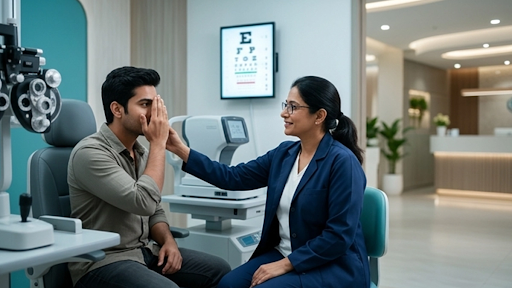
The classic Snellen chart has letters that get smaller from top to bottom. One eye is covered at a time while the other identifies the smallest line that can be read. The process is then repeated for the other eye. Glasses or contact lenses are used when correcting visual acuity.
Chart scale, light level, font design, contrast, and the patient’s prescription will play a role in results. For children or those who do not read letters, we may use symbols, pictures, or directional signs. Some clinics may use logMAR or ETDRS charts, which have more consistent letter placement and size progression.
A chart test is fast and useful, but it does not report on the cause of vision loss. At an eye examination, professional refraction may be done to determine the best lens power, which in turn produces the best image. A pinhole test may indicate that blur is a result of refractive error, but it does not take the place of a full clinical assessment.
What Can Change 20/20 Vision?
Clear vision is a result of the cornea and natural lens precisely focusing light on the retina. In myopia, hyperopia, and astigmatism, we see this focus change. As we age, we also note presbyopia, which slowly reduces close focus. These refractive errors may cause blur, squinting, headaches, or eye strain and may be treated with spectacles, contact lenses, or in some cases refractive surgery.
Temporary factors may also play a role in 20/20 vision. An unstable tear film may cause letters to go in and out of focus. Fatigue, extended screen time, reduced blinking, improper contact lens fit, certain medications, and poor lighting may decrease comfort, although the line you expect to see may still be read.
Cataracts cause light to scatter, corneal disorders to distort the image, and retinal or optic nerve issues to impede the reception or transmission of visual information. As many issues present similar signs, an online chart is not enough for diagnosis. It is best to see a professional for an eye examination, which is recommended when clarity changes, symptoms persist, or one eye performs differently from the other.
Can Vision Be Better Than 20/20 Vision?
Yes. Some people achieve 20/15 and even 20/10 results in a controlled setting, which is what we mean by fine central distance visual acuity at that point. That does not mean all aspects of their vision are better or that they are protected from ophthalmic disease.
A person with better-than-average chart performance may still experience glare, dry eyes, colour vision issues, reduced peripheral awareness, or problems with near work. Also, it is not the case that 20/20 vision proves perfect vision for a lifetime.
Does 20/20 Vision Mean You Never Need Glasses?
Not necessarily. Some people achieve 20/20 vision only when they wear their prescribed glasses or contact lenses. That is reported as their corrected vision. Their uncorrected score may be lower.
Some people pass the distance chart fine but need reading glasses because presbyopia affects near focus, which in turn affects reading while distance vision remains intact.
Lenses also address issues that the final chart does not fully reveal. Mild astigmatism, different prescriptions for each eye, or issues with focusing can cause headaches and fatigue. To say that unaided distance vision is a complete eye health report is to ignore the issue of being able to identify letters while also seeing comfortably and clearly throughout the day.
Properly prescribed glasses do not damage the eyes. They allow light to focus better on the retina when worn. The National Eye Institute reports that eyeglasses are a simple and safe solution for refractive errors.
Why an Eye Examination Matters When the Chart Is Normal
A full eye examination goes beyond basic chart reading. According to a patient’s age, symptoms, and risk factors, we may also check refraction, eye pressure, pupil response, eye movement, alignment, peripheral vision, the cornea, lens, retina, and optic nerve. Dilation is used to open the pupil, which in turn gives the clinician a better look at the inner structure of the eye.
This issue is important to note because a normal visual acuity score may coexist with the quiet development of a condition. Glaucoma may affect peripheral vision before central vision is impaired. Early diabetic or retinal changes may also present without an immediate change in the chart score.
The National Eye Institute reports that the use of mydriatics helps healthcare professionals look for glaucoma, diabetic retinopathy, and age-related macular degeneration.
How much of an eye examination you require is based on age, symptoms, contact lens use, health issues, and family history. People with diabetes, high blood pressure, or a history of eye disease may benefit from more frequent exams. It is best to determine the proper interval with an ophthalmologist rather than follow a general guideline.
Common Myths About Perfect Vision
One common myth is that those who have perfect vision can see clearly at all distances. What we in fact see is that distance, intermediate, and near tasks require different skills. It is also the case that a person may do well on the distance score but have difficulty with phone text or menus, which the eye has a harder time focusing on as we age and the lens’ flexibility decreases.
Another fallacy is that perfect vision also includes improved night vision, better colour vision, or reduced glare sensitivity. The standard chart, which has high-contrast symbols in a controlled lighting setting, does not represent all real-world situations.
It is also a fact that a normal result is not permanent. Refraction may change during growth and ageing. Cataracts, corneal changes, and retinal disease can cause loss of clarity at a later age. A past 20/20 vision report should not be used to dismiss new symptoms such as blur, distortion, flashes, floaters, or loss of side vision.
Finally, a good result in one eye does not mean that the other is also functioning well. The brain may use the stronger eye, which can hide a problem in the other, especially in children. That is why we test each eye separately during an eye examination.
When Should You Consult an Eye Doctor?
Get a check-up for persistent blur, repeated headaches during visual work, increasing glare, trouble seeing at night, frequent squinting, double vision, or a noticeable difference between the two eyes. Even if previous visits have reported 20/20 vision, new symptoms should be evaluated.
Urgent assessment is required for sudden loss of vision, a dark curtain or shadow, a sudden increase in floaters, flashes of light, severe pain, chemical exposure, trauma, or redness with reduced vision. Home visual acuity tests do not determine the cause of these warning signs.
At ASG Eye Care, our ophthalmologists review the chart report along with symptoms, refraction, and the health of the eye. The goal is not only to determine whether you have perfect vision, but also to understand what correction, treatment, or follow-up may be required.
Protecting Healthy Sight Over Time
Use your prescribed glasses or contact lenses as directed, take regular breaks from digital work, blink fully during screen use, wear protective eyewear for dangerous tasks, and use appropriate ultraviolet-blocking sunglasses outside.
People with diabetes or high blood pressure should work with their healthcare team to manage these conditions because systemic health issues can affect the eyes.
Do not wait until you have lost 20/20 vision to come in for an evaluation of symptoms such as discomfort, glare, fluctuating focus, or difficulty with near work. Stable vision does not always mean that there is no underlying issue. A full eye examination is the way to determine whether the issue is related to refraction, the health of the ocular surface, the lens, the retina, the optic nerve, or another element of the visual pathway.
Conclusion: Understanding 20/20 Vision in Shankar Nagar, raipur
20/20 vision is a basic measure of central distance visual acuity and does not, in its entirety, define healthy sight. It does not test for side vision, depth perception, contrast, colour, eye teaming, near focus, or the health of the retina and optic nerve.
Instead of looking at 20/20 vision as the end of the story for perfect vision, think of it as one piece of a larger puzzle that represents your overall vision health. Timely care, attention to symptoms, and regular professional testing play a key role in maintaining clear sight and the long-term health of your eyes.
If you are in Shankar Nagar, raipur and have concerns about your vision, symptoms, or eye health, consult ASG Eye Care for a professional eye examination rather than relying only on a chart result.
Frequently Asked Questions
1. Is 20/20 Vision Considered Normal?
Yes. At present, 20/20 is used as a standard reference for distance vision testing. It tells you what a normal eye should see at 20 feet, but it does not report on every element of vision health.
2. Is 20/20 Vision Better Than 20/40?
Yes, in terms of chart-based distance clarity. At 20/40, a person sees at 20 feet what a standard observer would see at 40 feet. The difference should be considered in the appropriate clinical context.
3. Can I Have 20/20 Vision and Still Need Reading Glasses?
Yes. Reading correction for presbyopia is available in the form of reading glasses, which may become necessary in the early to mid-forties. Distance vision may remain unaffected while seeing up close becomes more difficult.
4. Can a Child Have Normal Sight in One Eye and a Problem in the Other?
Yes. Children may not realise when one eye is better than the other. An assessment may reveal different focusing issues, amblyopia, or another eye condition.
5. Does Visual Acuity Measure Peripheral Vision?
No. It is primarily a test of what you are able to see at a distance. For peripheral vision, visual field testing or another appropriate clinical method may be used.
6. What Happens During an Eye Examination for Blurred Sight?
The doctor usually assesses distance and near vision in each eye, performs a refractive assessment, and examines relevant eye structures. Additional tests may be performed based on symptoms, age, health history, and individual risk factors.
7. Can an Online Chart Confirm Perfect Vision?
No. Screen size, resolution, brightness, and calibration can affect the result. An online chart may highlight a potential vision issue, but it does not replace a professional diagnosis or comprehensive eye examination.
8. How Often Should Someone With Clear Eyesight Get Checked?
The interval is based on age, symptoms, family history, contact-lens wear, and conditions such as diabetes or high blood pressure. An ophthalmologist can recommend an appropriate schedule for the individual after an eye examination.