


 ₹https://clinic.asgeyehospital.com/locator/-in-bilaspur/-in-vaishali-nagar/asg-eye-hospital-in-vaishali-nagar-bilaspur--5ldAzU/articles/common-eye-diseases-in-children-in-vaishali-nagar-bilaspur-how-they%E2%80%99re-treated-today--57fba12b-63f0-4cf6-aa26-b596df0aee0b
ASG Eye Hospital, Vaishali Nagar, bilaspur
Srikant Verma Marg, Talapara, Nearby Sony Showroom, Vaishali Nagar, bilaspur, chhattisgarh - 495001
Request A Call Back
ASG Eye Hospital Social Feeds in Vaishali Nagar, bilaspur
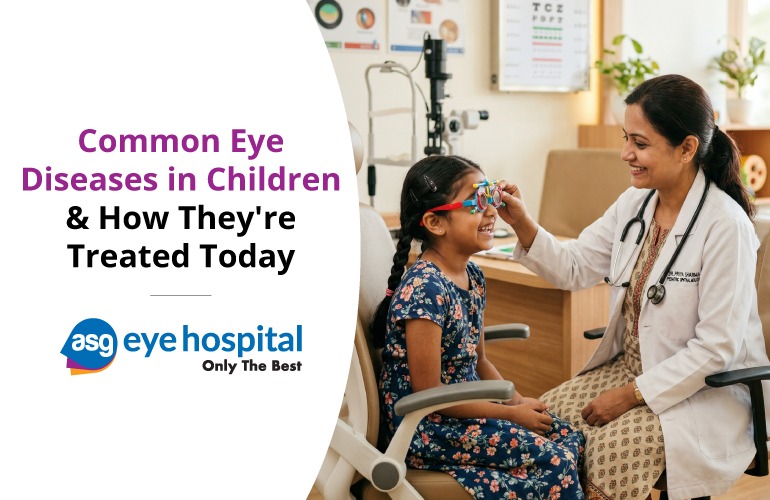
Common Eye Diseases in Children in Vaishali Nagar, bilaspur & How They’re Treated Today
Refractive Errors in Children
Refractive errors are among the most frequently diagnosed eye conditions in children. These occur when the eye cannot properly focus light onto the retina, resulting in blurred vision.
Types of Refractive Errors
Myopia (Nearsightedness)
Children can see nearby objects clearly but struggle to see distant objects.
Hyperopia (Farsightedness)
Difficulty focusing on nearby objects.
Astigmatism
Blurred or distorted vision caused by an irregular curvature of the cornea.
Children may not always express vision problems clearly. However, signs of eye problems in kids may include:
Frequent squinting
Sitting very close to screens
Headaches during reading
Difficulty concentrating in school
Current Treatment Options
Modern management strategies include:
Prescription eyeglasses or contact lenses
Myopia control therapies such as orthokeratology lenses
Low-dose atropine eye drops for progressive myopia
Regular vision monitoring by pediatric ophthalmologists
Early treatment supports healthy visual development and prevents worsening vision problems.
Conjunctivitis (Eye Infections)
Conjunctivitis, commonly called pink eye, is one of the most common eye diseases in children. It occurs when the conjunctiva, the thin membrane covering the white part of the eye and inner eyelids, becomes inflamed.
Causes
Bacterial infections
Viral infections
Allergic reactions
Environmental irritants
Symptoms
Red or watery eyes
Eye discharge
Itchy or irritated eyes
Swollen eyelids
Crusted eyelashes
Modern Treatment Approaches
Treatment depends on the underlying cause:
Antibiotic eye drops or ointments for bacterial infections
Antihistamine or anti-allergy drops for allergic conjunctivitis
Lubricating eye drops for irritation
Supportive care and hygiene measures for viral infections
Proper diagnosis by an ophthalmologist ensures effective treatment and reduces the risk of recurrence.
Amblyopia (Lazy Eye)
Amblyopia is a condition in which one eye develops weaker vision due to abnormal visual development during early childhood. If untreated during critical developmental years, it can lead to permanent vision impairment.
Causes
Significant refractive error in one eye
Eye misalignment (strabismus)
Obstruction of vision due to congenital cataracts or drooping eyelids
Treatment Methods
Modern amblyopia treatment includes:
Corrective eyeglasses
Eye patching therapy to strengthen the weaker eye
Atropine eye drops in specific cases
Vision therapy exercises
Regular monitoring by pediatric eye specialists helps restore balanced visual development.
Strabismus (Eye Misalignment)
Strabismus occurs when the eyes are not properly aligned. One eye may turn inward, outward, upward, or downward while the other remains focused.
Signs of Strabismus
Crossed or misaligned eyes
Head tilting while focusing
Closing one eye when looking at objects
Difficulty judging distances
Treatment Options
Modern treatment may include:
Corrective glasses
Prism lenses
Vision therapy
Eye muscle surgery to correct alignment
Early treatment greatly improves visual outcomes.
Congenital Cataracts
Although cataracts are commonly associated with aging, they can also occur in infancy or early childhood. Congenital cataracts cause clouding of the eye’s natural lens, affecting visual development.
Symptoms
Poor response to visual stimuli
Cloudy or white pupil appearance
Rapid eye movements
Delayed visual development
Advanced Surgical Treatment
Modern pediatric cataract treatment may involve:
Cataract surgery with intraocular lens implantation
Post-surgical glasses or contact lenses
Amblyopia therapy to strengthen vision
Early intervention is critical for preventing permanent vision impairment.
Pediatric Glaucoma
Pediatric glaucoma is a rare but serious condition where increased eye pressure damages the optic nerve. It may be present at birth or develop in early childhood.
Symptoms
Excessive tearing
Light sensitivity
Enlarged cornea
Cloudy appearance of the eye
Treatment Options
Management may include:
Medicated eye drops to reduce eye pressure
Minimally invasive glaucoma surgery
Traditional surgical procedures when necessary
Advances in pediatric ophthalmology have improved treatment success and long-term outcomes.
When Should Children Have an Eye Examination?
Routine eye examinations help detect early signs of vision problems in children before they affect learning or development.
Eye screenings are recommended during:
Infancy
Preschool years
School age
Parents should seek medical evaluation if their child experiences:
Persistent eye redness or discharge
Frequent blinking or squinting
Difficulty reading or focusing
Eye misalignment
Complaints of blurred or double vision
Early diagnosis allows effective treatment and prevents long-term complications.
Conclusion
For families in Vaishali Nagar, bilaspur, understanding common eye diseases in children is essential for protecting long-term visual health. Conditions such as refractive errors, conjunctivitis, amblyopia, strabismus, congenital cataracts, and pediatric glaucoma can significantly affect a child’s development if left untreated.
Fortunately, modern ophthalmology offers advanced diagnostic tools and effective treatments that allow early intervention and improved outcomes. Regular eye examinations and awareness of early warning signs help ensure that children receive timely care.
Specialised pediatric eye care services are available at ASG Eye Hospital, where experienced ophthalmologists provide comprehensive evaluation and treatment for childhood vision problems.